Article: Day 4 - Learning to Read the Water

Day 4 - Learning to Read the Water
SCRIPTURE
“If any of you lacks wisdom, you should ask God, who gives generously to all without finding fault, and it will be given to you.” — James 1:5
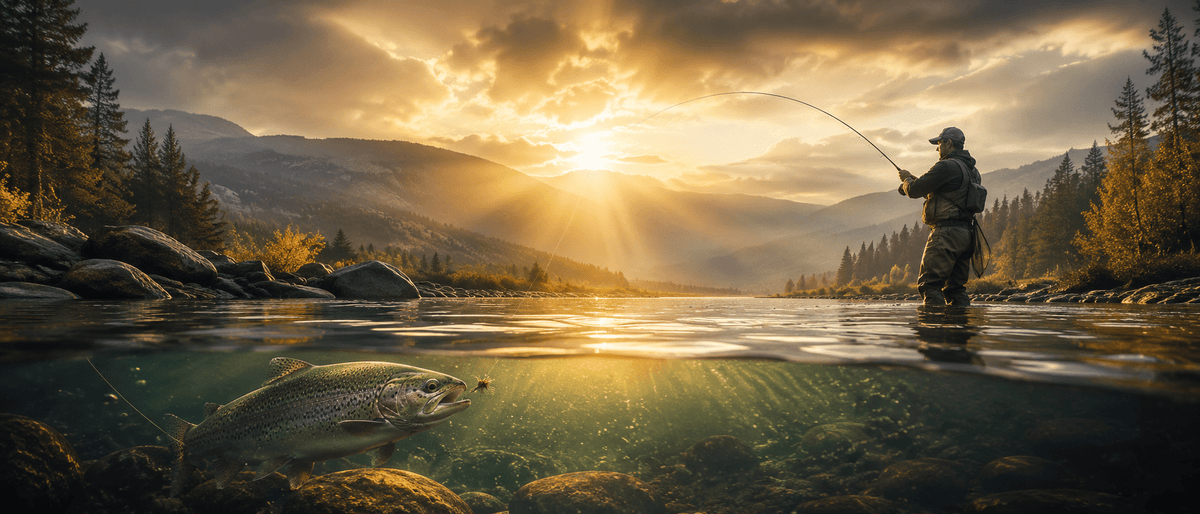
There's something magical about standing in water with a fishing rod in your hands. The world seems to slow down, and for a moment, everything else fades away. But here's the thing that most people don't realize when they first start fishing: anyone can wade into the water and cast a line. What separates the experienced angler from the beginner isn't just technique or fancy equipment. It's the ability to read the water.
When you're new to fishing, everything looks the same. Whether you're standing along the edge of a peaceful lake with a gentle wind brushing across the surface or wading into a river where the current seems to be moving in a hundred different directions at once, it all feels like one big mystery. You make your casts, you try your luck, and honestly, it feels like you're just guessing. You're hoping that somewhere out there, a fish will be curious enough to bite. But as time goes on, something remarkable begins to happen. Your eyes start to adjust. Your mind begins to recognize patterns. And suddenly, the water isn't quite so mysterious anymore.
The Art of Reading Water
Learning to read water is like learning a new language. At first, every word is foreign. But gradually, as you spend more time immersed in it, the words start to make sense. You begin to notice the small details that others walk right past. You see how a ripple forms differently over a shallow shelf compared to deeper water. You recognize the quiet seam where fast-moving water meets slower water, and you understand that this is exactly where fish like to rest. You notice the deeper shade along a bank and realize that fish feel safe in those shadows, protected from predators and the bright sun above.
On a lake, this understanding takes on a different form. You learn to look for structure beneath the surface that you can't even see. Drop-offs, weed lines, points that jut out into the water—these are all places where life congregates. Fish don't randomly scatter throughout a lake. They gather in specific places, and once you learn to identify those places, your success rate skyrockets. It's not magic. It's knowledge combined with observation.
On a river, the lesson is different but equally important. You begin to understand how current works. You see how it carries food downstream, creating a natural conveyor belt of nutrients. You recognize how the current creates resting places—little pockets of calm water behind rocks or along the banks where fish can conserve energy while still having access to food. These spots would be invisible to someone who hasn't learned to read the water, but to someone who has, they're like neon signs pointing to where the fish are waiting.
What once felt completely random and unpredictable begins to make sense. The water starts to tell a story, and you become fluent in reading it.
The Time and Patience Required
But here's what's important to understand: this kind of understanding doesn't come quickly. It can't be rushed. It takes time. It takes patience. And most importantly, it takes paying attention. You have to be willing to spend hours on the water, observing, learning, making mistakes, and adjusting your approach. You have to be humble enough to admit when you don't know something and curious enough to figure it out.
This is where many people give up. They expect instant results. They think that if they just buy the right gear or watch the right YouTube video, they'll suddenly become expert anglers. But that's not how it works. Fishing, like most worthwhile pursuits in life, requires dedication and a willingness to be a student.
A Spiritual Parallel
Now, here's where this fishing lesson becomes something much deeper. Walking with God is no different from learning to read the water. Life isn't always obvious. There are seasons when everything feels unclear. You're standing at a crossroads with multiple directions you could take, but no clear answer as to what's right. You can rush into it, make quick choices, and hope for the best. Or you can slow down and begin to seek something deeper.
God doesn't expect you to have it all figured out. He doesn't demand that you know the answer before you ask the question. Instead, He invites you to ask. He welcomes you to come to Him for wisdom, not just once in a moment of crisis, but continually, as an ongoing practice. James 1:5 reminds us: "If any of you lacks wisdom, you should ask God, who gives generously to all without finding fault, and it will be given to you."
Just like learning to read the water, spiritual discernment is something that grows over time. The more time you spend with God, the more you begin to recognize His voice. It's not always loud. It's not always obvious. But it's steady and consistent. You begin to sense when He's asking you to move forward, when He's telling you to wait, when He's redirecting you entirely in a new direction.
The Depths Below the Surface
What once felt confusing starts to come into focus. You stop reacting to every surface ripple and start understanding what's happening beneath it. You realize that God isn't just concerned with the surface of your life. He's working in the depths. And often, that's where His guidance is found.
The problem is that most of us don't slow down long enough to see it. We want instant clarity. We demand immediate answers. We expect quick direction. But just like the water doesn't reveal everything at once, God often reveals His direction over time, as we learn to trust Him, seek Him, and walk with Him step by step.
The more you learn to read the water, the less you rely on guesswork. You make decisions based on knowledge and experience rather than hope and luck. Similarly, the more you learn to walk with God, the less you rely on your own understanding. You begin to trust His wisdom over your own limited perspective. You start to see that His guidance, though sometimes subtle, is always leading you toward what's best for your life.
Practical Application
So what does this mean for you today? It means taking a moment to pause before you rush into your next decision. Instead of immediately acting on your first instinct, ask God for wisdom. Pay attention, not just to what's obvious on the surface, but to what may be happening beneath the surface of your circumstances. Trust that He is guiding you, even in subtle ways that you might not immediately recognize.
This might mean spending extra time in prayer. It might mean reading Scripture and allowing God's Word to speak to your situation. It might mean seeking counsel from wise people in your life who know you and understand your circumstances. It might mean simply sitting in silence and listening for that still, small voice that God uses to speak to our hearts.
A Prayer for Wisdom
As you move through your day, remember that God offers wisdom freely to those who ask. He doesn't hold back. He doesn't make it difficult. He simply asks that you come to Him with a humble heart, ready to listen and ready to follow where He leads.
Father, thank You for the wisdom You offer so freely. Teach me to slow down and seek You in every decision I face. Help me to recognize Your voice, even when it's quiet, and to trust Your direction over my own understanding. Give me discernment to see what You are doing beneath the surface of my life, and the patience to follow You step by step. In Jesus' Name, Amen.
The water has much to teach us, but God has even more. All we have to do is slow down long enough to learn.

Leave a comment
This site is protected by hCaptcha and the hCaptcha Privacy Policy and Terms of Service apply.