Day 2 - Still Waters: Finding Rest in God's Quiet Places
SCRIPTURE
Psalm 23:2: "He makes me lie down in green pastures, he leads me beside quiet waters."
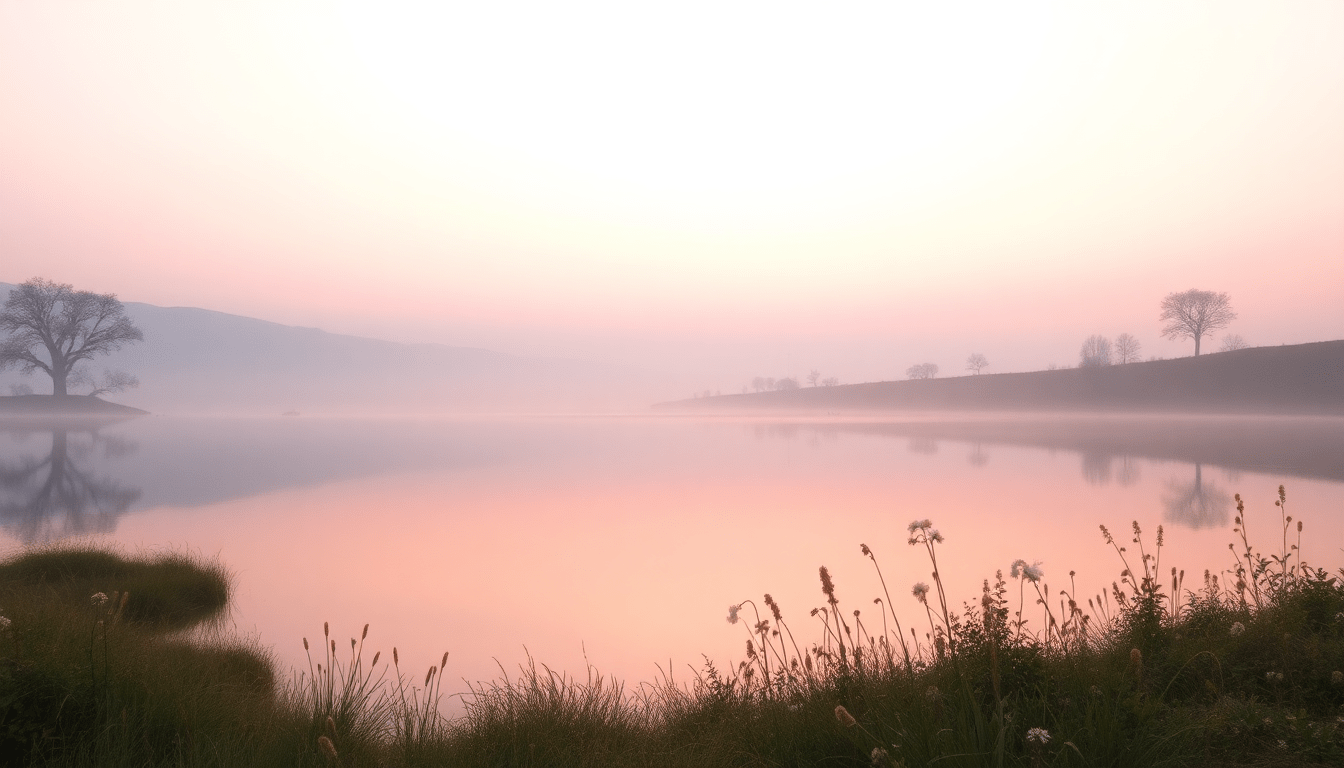
There's something sacred about those early morning moments by the water when the world hasn't quite woken up yet. The river seems to whisper instead of speak, the current moves softly, and the fog hangs just above the surface like a gentle blanket. If you've ever stood on the bank of a quiet river at dawn, you know exactly what I'm talking about. The whole world feels like it has been invited into silence, and for a moment, you're not sure if you should even breathe too loudly. As a fly fisherman, I've learned to treasure those moments more than any successful cast or impressive catch. Before the casting begins, before the first rise, before any of the action that we typically associate with fishing, there is the gift of simply standing there, breathing slowly, letting the quiet settle deep into your soul.
The Gift of Stillness in a Noisy World
Most of us do not naturally choose stillness. Our default setting is to hurry, strive, push, and prove ourselves. We measure our days by how much we accomplish, and we often mistake exhaustion for faithfulness. We wear our busyness like a badge of honor, as if the number of things on our to-do list somehow determines our worth. We fill every moment with activity, every silence with noise, every pause with productivity. But somewhere along the way, we've lost something essential. We've forgotten what it feels like to simply be, without doing.
Psalm 23:2 reminds us of something we desperately need to hear: "He makes me lie down in green pastures, he leads me beside quiet waters." Notice the language here. The Shepherd doesn't just suggest rest or recommend it. He makes us lie down. He leads us beside quiet waters. There's an intentionality to this, a divine insistence that rest is not optional. It's not something we do when we've earned it or when we've finally finished everything on our list. It's something the Shepherd actively provides because He knows we need it.
Understanding Rest as Trust
Here's the thing that took me years to understand: rest is not laziness. Stillness is not weakness. These are not character flaws or signs of spiritual immaturity. Instead, rest is trust. When you stop striving and allow yourself to be still, you're making a declaration. You're saying, "I trust that God is in control. I trust that the world will keep spinning without my constant effort. I trust that my worth is not determined by my productivity."
God knows when your spirit is tired. He sees the exhaustion that no amount of sleep can fix. He knows when the noise of life has crowded out His voice, when the constant demands and distractions have left you spiritually depleted. And because He is good—genuinely, deeply good—He does not always drive you harder. Sometimes He makes you lie down. Sometimes He leads you to quiet water so you can stop pretending you are strong enough to carry everything alone.
This is radical grace. This is the Shepherd saying, "I see you. I know you're tired. And I'm going to lead you to a place where you can rest, not because you've earned it, but because I love you."
What the River Teaches Us
The river has been my greatest teacher in this regard. You cannot hear the subtle rise of a fish if your mind is frantic with worry or distraction. You cannot feel the delicate drift of your fly if you are rushing through the morning, checking your watch, thinking about everything else you need to do. And you cannot fully recognize the presence of God if you never slow down long enough to be still.
Fly fishing requires a kind of presence that our modern world actively works against. You have to be there, fully there, with your whole attention focused on the water in front of you. You have to notice the tiny details—the slight dimple on the surface, the shadow moving beneath the current, the way the light hits the water at a particular angle. This kind of attention is a form of prayer. It's a way of saying to God, "I'm here. I'm listening. I'm paying attention."
When I'm standing in the river, waders up to my chest, rod in hand, there's no room for the noise that usually fills my head. There's no space for anxiety about tomorrow or regret about yesterday. There's only the present moment, the water, the sky, and the quiet conversation between my soul and my Creator.
The Cost of Constant Motion
We live in a culture that celebrates constant motion. We're always on, always connected, always producing. We check our phones before we've even gotten out of bed. We answer emails during dinner. We scroll through social media while we're supposed to be present with the people we love. We've created a world where stillness feels like failure and rest feels like laziness.
But this constant motion comes at a cost. It costs us our peace. It costs us our presence. It costs us our ability to hear God's voice in the quiet moments. We become so accustomed to noise that silence feels uncomfortable. We become so used to doing that being feels like wasting time.
The Psalmist understood something we've largely forgotten: the soul needs rest. Not just physical rest, though that's important. The soul needs spiritual rest, the kind that comes from trusting God completely, from stepping out of the striving and into the stillness.
Making Room for Stillness
So what does this look like practically? How do we make room for stillness in our lives when everything around us is pushing us toward constant activity?
It starts with a decision. You have to decide that rest is important enough to protect. You have to set boundaries around your time and your attention. You have to say no to some things so you can say yes to the quiet waters that God wants to lead you beside.
For some people, this might look like a regular time of prayer or meditation. For others, it might be a walk in nature, time by the water, or simply sitting in silence with a cup of coffee. It doesn't have to be complicated or time-consuming. Even fifteen minutes of genuine stillness can restore your soul in ways you didn't expect.
The key is intentionality. You have to choose it. You have to protect it. You have to treat it as seriously as you treat any other important appointment in your life.
The Spiritual Application
Make room for stillness today. Step away from the noise—the notifications, the news, the endless stream of information and demands. Let God restore your soul. Rest is one of the ways you declare that you trust Him. When you stop striving and allow yourself to be still, you're saying to God, "I believe that You are in control. I believe that my worth is not determined by what I produce. I believe that You love me not for what I do, but for who I am."
This is the gift that Psalm 23 offers us. This is the promise of the Shepherd who leads us beside quiet waters. Not because we've earned it, but because He loves us. Not because we've finished everything on our list, but because He knows we need it.
A Prayer for Stillness
Father, lead me beside quiet waters. Slow my heart and quiet the noise inside me. Teach me that rest is not wasted time, but time spent in Your care. Restore my soul and help me live from Your peace instead of my pressure. Help me remember that I am loved not for what I accomplish, but for who I am in You. In Jesus Name, Amen.


Leave a comment
This site is protected by hCaptcha and the hCaptcha Privacy Policy and Terms of Service apply.